Strategic shift towards ergonomic lasting, eco-conscious materials, and agile OEM/ODM manufacturing networks.
The global women's sneaker market has undergone a paradigm shift. Historically treated as scaled-down iterations of men's athletic shoes—a phenomenon historically criticized in the industry as "shrink it and pink it"—modern women's sneakers represent a highly technical convergence of female-specific biomechanical lasting, fashion-forward aesthetics, dynamic activewear integration, and strict environmental sustainability standards. By 2026, the global market for women's athletic and lifestyle sneakers is projected to exceed USD 115 Billion, driven by increasing participation in fitness routines, the ubiquity of athleisure in workplace attire, and rising disposable income across emerging economies.
For global footwear buyers, retail brand managers, e-commerce conglomerates, and corporate procurement directors, identifying the right manufacturing partner is no longer just about locating the lowest FOB price per unit. Today's commercial success depends on securing Tier-1 and Tier-2 factories that possess cutting-edge automated tooling, micro-biomechanics research capabilities, closed-loop sustainability workflows, and robust supply chain resilience. This whitepaper offers an exhaustive analysis of the world's leading women's sneakers manufacturers and manufacturing clusters, dissecting their operational matrices, technological roadmaps, and compliance credentials.
Rigorous multi-dimensional assessment metrics for tier-1 footwear manufacturing selection.
Evaluation of the factory’s internal last-making shop. Tier-1 facilities utilize CAD/CAM digital last customization that factors in female anatomical heel cup narrowing, instep arch contouring, and dynamic toe-box flexion. Factories with SATRA-certified footwear technicians rank highest in engineering precision.
Assessing sourcing capabilities for sustainable raw materials: GRS-certified post-consumer recycled PET uppers, supercritical nitrogen-infused EVA midsoles, bio-based polyols derived from sugarcane, and water-based eco-friendly polyurethane (PU) adhesives free of Volatile Organic Compounds (VOCs).
Inspection of manufacturing lines. Premium sneakers require automated robotic spray cementing, computer-controlled flash drying, precise toe-lasting and heel-lasting machinery, and inline pneumatic bonding presses to guarantee upper-to-outsole peel strengths exceeding 3.5 kgf/cm.
Verification of mandatory global operational standards including HIGG Index (FEM/FSLM), BSCI (Business Social Compliance Initiative), SMETA 4-Pillar, ISO 9001 quality management, ISO 14001 environmental safety, and ZDHC (Zero Discharge of Hazardous Chemicals) compliance.
| Evaluation Parameter | Tier-1 Factory Standard | Mid-Tier Factory Standard | Assessment Methodology |
|---|---|---|---|
| Upper-to-Outsole Peel Strength | ≥ 4.0 N/mm (SATRA TM14) | 2.5 - 3.2 N/mm | Pneumatic Tensile Testing Machine |
| Sole Flex Resistance | 100,000 Cycles without cracking | 50,000 Cycles | Bata Belt Flex Tester / Mattia Flex |
| VOC Emissions (Cementing Line) | < 20 mg/m³ (Water-based Adhesives) | < 80 mg/m³ (Solvent-based) | Gas Chromatography-Mass Spectrometry |
| Sample Lead Time | 5 to 7 Days (3D Rapid Prototyping) | 14 to 21 Days | Digital CAD/CAM & Physical Assembly Audit |
| Minimum Order Quantity (MOQ) | Flexible (500 – 1,000 Pairs/Colorway) | 2,000 – 3,000 Pairs/Colorway | Commercial Supply Chain Agility Audit |
In-depth profiles of global manufacturing powerhouses setting industry benchmarks in volume, precision, and sustainability.
Primary Focus: Integrated Women's Apparel, Lifestyle Sneaker Upper Synergies, OEM/ODM Fashion Footwear & Athleisure Collections.
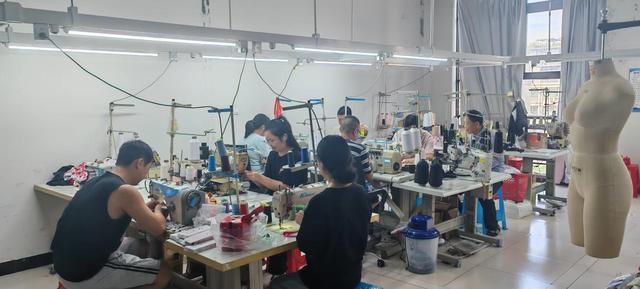
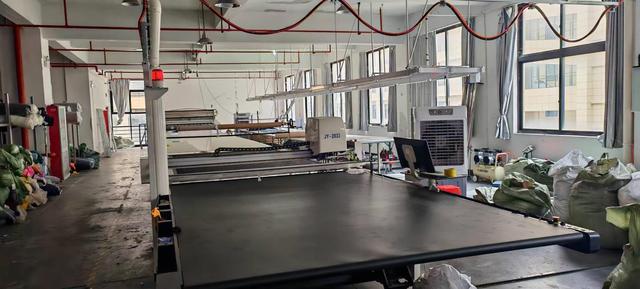
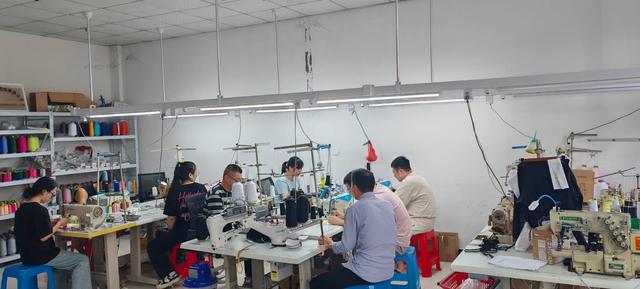
Overview & Capacity: Established in 2012 in Guangzhou, Guangdong Province, Guangzhou Dahab Fashion Co., Ltd. has developed into a multi-faceted manufacturing powerhouse. Operating a state-of-the-art facility spanning over 16,000 square meters and employing a highly skilled workforce of more than 260 specialists, Dahab Fashion bridges the gap between activewear textiles and contemporary lifestyle footwear engineering. The factory excels in full-suite OEM and ODM development, delivering high-performance knit uppers, lifestyle casual sneakers, and coordinated athletic capsule lines for boutique brands, e-commerce giants, and multinational retail chains across North America, Europe, the Middle East, and Australia.
Key Technological Advantages: Advanced computer-controlled flat knitting for seam-free knit uppers, automated cutting tables, rigorous in-house quality assurance labs, complete private-label packaging and custom branding, rapid sample turnarounds (under 7 days), and eco-friendly fabric processing adhering to European environmental standard frameworks.
Primary Focus: High-Performance Athletic Women's Running Shoes, Basketball Sneakers, Technical Footwear Assembly.
Overview & Capacity: As the world's largest branded athletic and casual footwear manufacturer, Yue Yuen operates vast manufacturing centers across China, Vietnam, Indonesia, and Bangladesh. Accounting for a significant fraction of global sports shoes produced for elite brands, Yue Yuen sets the gold standard in high-volume cold-cement construction, automated TPU shank injection, and supercritical foam midsole processing for top-tier women's athletic lines.
Primary Focus: Performance Running, Eco-Friendly Foam Midsoles, Specialized Women's Athletic Lasting.
Overview & Capacity: Renowned for its deep R&D integration with global sports powerhouses, Chang Shin produces tens of millions of pairs annually. The company has pioneered lean manufacturing principles (TPS) adapted for footwear and leads the industry in implementing bio-based EVA, zero-solvent bonding agent technologies, and automated 3D vision robotic sewing lines engineered specifically for female athletic upper geometry.
Primary Focus: High-End Fashion Sneakers, Luxury Leather Women's Sneakers, Athleisure Hybrid Footwear.
Overview & Capacity: Stella International is the premier manufacturer for luxury, premium fashion, and high-end lifestyle sneakers. Specializing in intricate hand-stitched details, top-grain Italian leather uppers, complex multi-component soles, and sophisticated dress-casual hybrids, Stella serves top luxury houses in Paris, Milan, and New York while maintaining high volume scalability.
Primary Focus: Technical Women's Athletic Footwear, Outdoor Trail Sneakers, Ergonomic Cleats & Court Shoes.
Overview & Capacity: Founded in 1971, Feng Tay is a titan in technical athletic footwear development. With major operational clusters in Taiwan, Vietnam, India, and China, Feng Tay accounts for approximately 1-6th of global output for leading sports brands. Their specialized women's biomechanics lab conducts gait dynamics analysis to engineer customized arch support units and high-traction rubber outsoles.
Primary Focus: Lightweight Performance Running, Flyknit Upper Automation, Urban Casual Women's Sneakers.
Overview & Capacity: Situated in Guangdong, China, with expanding facilities in India, Apache Footwear is celebrated for its implementation of Industry 4.0 automated shoe manufacturing. Apache features fully automated stitching cells, computer-guided laser cutting, and customized automated sole-attachment lines that drastically reduce production lead times and human error rates in mass production.
Primary Focus: High-Rebound Foam Midsole Engineering, Sustainable Women's Lifestyle Footwear.
Overview & Capacity: Taekwang Industrial operates massive, modern production facilities in Vietnam and Korea. Known for breakthroughs in polymer chemistry, Taekwang produces ultra-lightweight midsoles with superior energy return values. They specialize in integrating post-consumer recycled rubber into low-profile women's sneaker outsoles without sacrificing abrasion resistance.
Primary Focus: Eco-Conscious Sneakers, Seamless Engineered Mesh Uppers, Multi-Density Cushioning.
Overview & Capacity: Employing over 80,000 workers globally, Ching Luh Group is a cornerstone of the global footwear infrastructure. Their specialized Dean Shoes division focuses heavily on sustainable innovation, utilizing 100% water-based adhesives, digital dye sublimation printing to eliminate toxic wastewater, and modular assembly lines for rapid design switching.
Primary Focus: Vulcanized Women's Canvas Sneakers, Retro Court Shoes, Urban Streetwear Footwear.
Overview & Capacity: Diamond Group is an industry leader in vulcanized footwear construction. Their factories combine traditional rubber autoclaving processes with modern automated rubber compounding and canvas stitching control. They supply global lifestyle brands seeking vintage, high-durability rubber foxing tape sneakers optimized for women's sizing scales.
Primary Focus: Private Label E-Commerce Supply Chains, Rapid Prototyping, Mid-to-High Volume OEM/ODM Sneakers.
Overview & Capacity: Encompassing a dense industrial network of over 4,000 OEM factories and component suppliers, the Putian Footwear Hub produces hundreds of millions of pairs of sneakers annually. Supported by local government R&D centers, the cluster offers unmatched supply chain agility, where components—from TPU eyelet stays to customized phylon midsoles—can be sourced within a 10-kilometer radius, facilitating hyper-fast product launches.
Deep-dive into structural foot lasts, polymer midsole innovations, and upper material chemistry.
Women are not merely smaller men in foot morphology. Biomechanical studies indicate that females exhibit a significantly narrower calcaneus (heel bone) relative to the ball of the foot (forefoot width). Tier-1 factories engineer lasts with a higher heel-to-forefoot width ratio, elevated medial arch support, and reduced girth around the instep cone to prevent heel slippage and plantar fasciitis.
Due to wider pelvic geometry, women generally possess a larger Q-angle (the angle formed between the quadriceps muscle and the patellar tendon). This increases the tendency for overpronation during foot strike. Sneaker factories solve this by integrating dual-density EVA midsoles, medial TPU torsion shanks, and asymmetrical heel counters that stabilize rearfoot motion.
Traditional EVA (Ethylene-Vinyl Acetate) midsoles undergo thermal degradation over time. Advanced manufacturers employ supercritical fluid foaming processes using non-toxic Nitrogen gas. This microcellular structure achieves a density under 0.12 g/cm³ while boosting energy return to over 75%, yielding ultra-lightweight sneakers tailored for female runner profiles.
Modern women's footwear construction involves a complex layered system engineered for thermal regulation, structural integrity, and sustainable lifecycles:
Financial breakdown, tooling investments, and multi-tier quality control protocols for brand procurement teams.
Navigating commercial negotiations with international footwear manufacturers requires a granular understanding of FOB (Free on Board) cost drivers and tooling amortization schemes. Outsole mould creation represents one of the largest upfront capital expenditures in women's sneaker development.
A full size run for women's footwear (US Sizes 5 to 11, including half sizes) requires approximately 13 distinct mold sets for outsoles and midsoles. Steel CNC molds cost between $1,500 and $3,500 per size set, while aluminum rapid-prototyping molds cost approximately $800 to $1,200 per set. Leading enterprise brands amortize tooling charges across minimum order commitments of 10,000 pairs over a 12-month production window.
A typical FOB breakdown for a $28.00 per unit premium women's lifestyle sneaker includes:
To eliminate product recall risks and maintain brand equity, enterprise buyers enforce a strict four-stage quality gate system throughout production execution:
Aligning supply chains with EU Deforestation Regulation (EUDR), EPR laws, and decarbonization benchmarks.
Environmental responsibility has transitioned from a marketing asset to a binding regulatory imperative in major retail markets. European and North American legislative bodies have introduced stringent directives impact footwear supply chains, such as the EU Extended Producer Responsibility (EPR) scheme and corporate sustainability due diligence mandates.
Tier-1 sneaker factories must implement chemical management systems compliant with the ZDHC Manufacturing Restricted Substances List (MRSL). This guarantees that hazardous heavy metals, phthalates, alkylphenol ethoxylates (APEOs), and PFCs are completely eliminated from dyeing and bonding processes.
Leading factories incorporate Global Recycled Standard (GRS) traceable materials. By using post-industrial rubber waste regrind in outsoles (up to 15% without sacrificing tensile strength) and 100% rPET shoe laces and linings, manufacturers reduce CO2 emissions per pair by up to 2.4 kg.
Ethical manufacturing relies on third-party verification. Tier-1 factories maintain annual audit certificates for SMETA 4-Pillar (Labour Standards, Health & Safety, Environment, Business Ethics) and BSCI, guaranteeing fair living wages, maximum 60-hour work weeks, and zero child labor.
Integrated Garment & Footwear Synergy, 16,000+ SQM Manufacturing Hub in Guangzhou, China
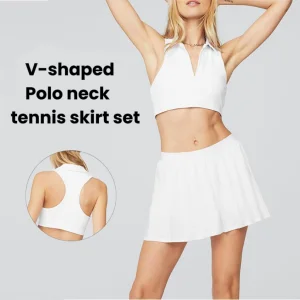
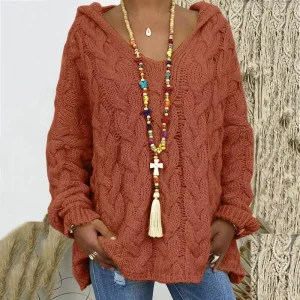
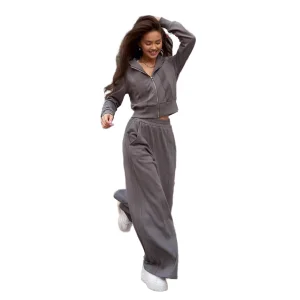
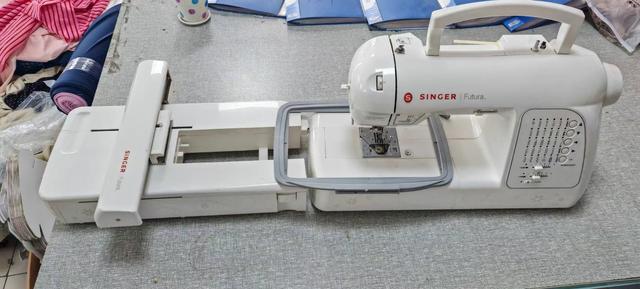
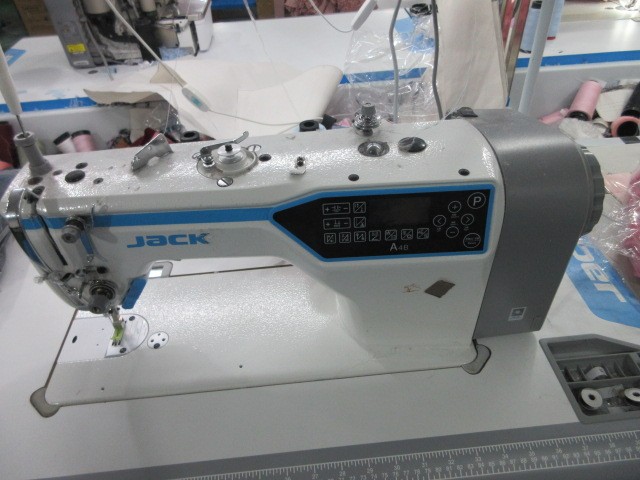
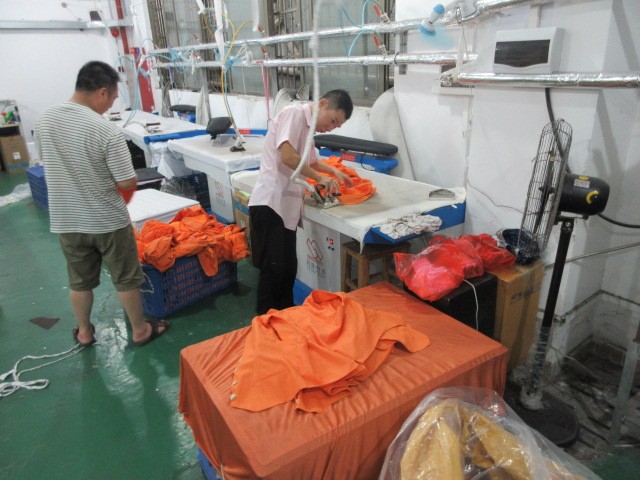
Guangzhou Dahab Fashion Co., Ltd. is a professional women's clothing and apparel-lifestyle manufacturer located in Guangzhou, Guangdong, China. Established in 2012, the company specializes in the design, development, and production of fashion apparel and activewear accessories for international brands, wholesalers, retailers, boutique stores, and fast-growing e-commerce businesses. With a modern manufacturing facility spanning over 16,000 square meters and a dedicated workforce of more than 260 skilled employees, Dahab Fashion provides comprehensive OEM and ODM solutions to customers worldwide.
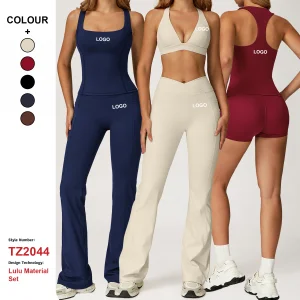
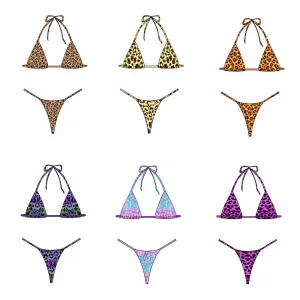
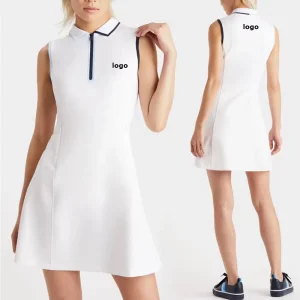
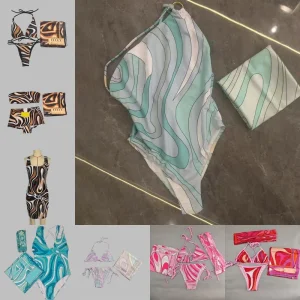
The company offers a highly diverse range of women's fashion and sportswear products, including casual wear, fashion dresses, blouses, tops, skirts, knitwear, outerwear, loungewear, business attire, sports bras, seamless yoga sets, and seasonal athleisure fashion collections. By combining market-driven design concepts with high-efficiency production capabilities, Dahab Fashion helps global customers create highly competitive apparel and footwear-matched collections that align with dynamic consumer preferences across North America, Europe, Australia, and the Middle East.
Explore matching activewear, gym sets, and streetwear lines to complete your footwear and apparel catalog.
Navigating tariffs, regional shipping routes, and trade compliance across major international buying territories.
Navigating Section 301 tariffs requires strategic sourcing. Overseas factories often support DDP (Delivered Duty Paid) logistics via direct ocean freight to West Coast ports (Los Angeles/Long Beach). Compliance requirements include CPSIA testing, US Customs country-of-origin marking, and ASTM F2413 impact resistance standard adherence for safety-toe athletic shoes.
Strict enforcement of REACH regulations mandates that all footwear components undergo chemical lab screening for banned SVHCs (Substances of Very High Concern). Furthermore, European buyers prioritize factories certified under the EU Ecolabel scheme and suppliers offering full supply chain visibility under upcoming Digital Product Passport (DPP) mandates.
Middle Eastern markets demand ultra-breathable, high-temperature resistant upper constructions and quick-turnaround seasonal air logistics. Australian procurement teams focus heavily on anti-microbial treatments, UV-resistant upper synthetics, and strict compliance with Australian Consumer Law (ACL) labeling specifications.
Technical answers to crucial B2B footwear manufacturing, tooling, and supply chain queries.
 Dahab Fashion